What is the real tax rate in Canada?

Christopher Davis
Updated on March 07, 2026
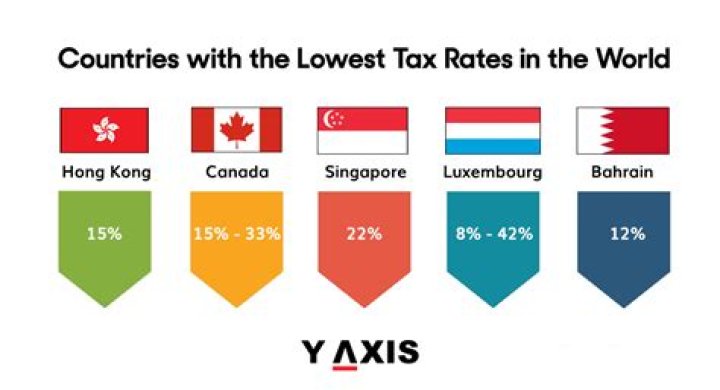
Federal Income Taxes In Canada, the range is 15% to 33%. In the U.S., the lowest tax bracket for the tax year ending 2019 is 10% for an individual earning $9,700 and jumps to 22% for those earning $39,476. The corresponding bottom Canadian bracket stays at 15% until $47,630.
What is the tax law in Canada?
While Canadian residents are subject to tax on worldwide income, non- residents are generally taxed on their sources of income within the country. A non-resident is generally subject to taxation on Canadian-source income, such as: Income from a business carried on in Canada. Income from an office or employment in …
Who pays the most taxes in Canada?
Of those Canadians who do file a return (taxable and non-tax- able) almost 87% of the federal income tax is paid by those who earn $50,000 or more; almost 88% of provincial income tax is paid by those who earn $50,000 or more.
Who does not pay income tax in Canada?
On average, two of every five Canadian households do not pay anything towards federally and provincially funded expenses such as health care, education, community and social services, national defence, public safety and even the good old Canada Revenue Agency.
What is classified as low income in Canada?
The Low Income Measure defines low income as being below a fixed percentage of income. A household is considered low income if its income is below 50% of median household incomes. It is, therefore, a relative measure of low income.
When do you have to pay tax on real estate in Canada?
Myth – Non-resident real estate investors do not have to pay Canadian federal income tax. Fact – Generally, a non-resident who sells certain taxable Canadian property must notify the CRA of the sale no later than 10 days after the date of the sale and pay an amount to cover the estimated taxes on that sale.
What do you need to know about taxes in Canada?
If you’re planning to relocate to Canada, you’ll want an understanding of the Canadian tax system to ensure you are compliant with local tax laws. In Canada, taxes are set by the federal and provincial government and are collected by the Canadian Revenue Agency (CRA).
Why are real estate taxes so complicated in Canada?
Through KPMG’s assessment of the Canadian Real Estate industry, a number of trends influence today’s tax environment, including: 1. Increasing complexity of relevant laws; 2. Increasing globalization of investment; 3. Increasing sophistication of financial and structural arrangements; 4.
Which is the best book for real estate taxes in Canada?
Welcome to the 2017 edition of KPMG’s Canadian Real Estate Tax Handbook. This book is intended for tax, accounting and finance professionals and others with an interest in the Canadian income tax and GST/HST issues impacting the Canadian real estate industry.