What is the first step to start modeling?

James Olson
Updated on March 18, 2026
The first step to becoming a model is taking professional photos of yourself that you can share with clients and agencies down the line. You’ll want to start building up a portfolio to show clients and agencies, so it’d be wise to get together a book or an online collection of your photos.
What are the 4 stages of the process of Modelling?
The steps of the modeling process are as follows:
- Analyze the problem. We must first study the situation sufficiently to identify the problem pre cisely and understand its fundamental questions clearly.
- Formulate a model.
- Solve the model.
- Verify and interpret the model’s solution.
- Report on the model.
- Maintain the model.
How do you start off modeling?
Here are 5 expert tips to get you started on your modeling career.
- Get an Honest Evaluation by Experienced Professionals.
- Get As Much Exposure As Possible.
- Don’t Spend Money on Expensive Photoshoots.
- Modeling Schools Are Not Necessary.
- Only Work With Legitimate Modeling Agencies.
How much does a starting model make?
You can expect around $100 per hour if you are doing well. Starting model salary may be much lower, even $20 per hour, and you may have to work for free at first to get your portfolio. This type of modeling can be very well-paid, with an average of $200 per hour.
What are female model requirements?
Height is typically between 5’9″-6″, bust is between 32″-36″, waist is between 22″-26″, and hips should be between 33″-35″. Of course most woman don’t meet these standards and that is why fashion models generally get paid the most and work the most.
What are the seven steps in the modeling process?
- Step 1: Problem definition.
- Step 2: Data collection.
- Step 3: Model development.
- Step 4: Model verification.
- Step 5: Optimization and decision making.
- Step 6: Model communication to management.
- Step 7: Model implementation.
What is the most important step in the modeling process?
5.1 Problem definition. Defining the specific reason for the model is the most important step in model development.
Why are models so skinny?
Some models will keep their weight on the lower side with the help of a healthy diet and exercise. They will squeeze workouts into their busy schedules, sometimes hitting the gym multiple times in one day, and they will eat healthy carbs and lean protein while limiting their sugar intake.
Can you start modeling at 35?
While many models start their careers at a young age and have relatively short careers, you can begin modeling later in life and still become a success. The reality of the modeling business is that a lot of younger models will get the work if you simply walk into a casting call.
How to start a process [ process modeling ]-Appian?
Appian isn’t the only system in your enterprise, and because of this, you might eventually need to initiate Appian processes from one of those other systems. There are three different ways to initiate Appian processes from other systems: Using a Web API to call the Start Process smart service or initiate a process from Appian RPA.
What are the events in SmartDraw business process modeling?
These elements are included in the SmartDraw business process modeling symbols library. An event is an occurrence that triggers or creates a task or activity. Usually all business process maps and models will have a start event and an end event, but they can also have intermediate events that redirect the flow to a different path.
What do you need to know about business process modeling?
Experts recommend developing clear models with understandable notation early on in projects in order to validate the requirements of the software. BP Modeling allows software engineers to negotiate with stakeholders to determine the system that needs to be built, based on what is optimal for both groups.
When do students begin to model an object?
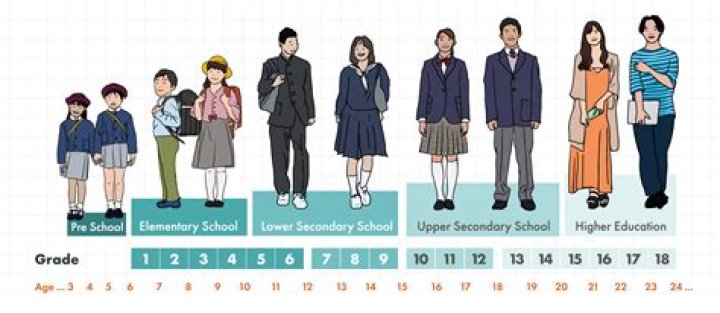
Modeling can begin in the earliest grades, with students’ models progressing from concrete “pictures” and/or physical scale models (e.g., a toy car) to more abstract representations of relevant relationships in later grades, such as a diagram representing forces on a particular object in a system. (NRC Framework, 2012, p. 58)