What are rusticles on the Titanic?

Robert Miller
Updated on April 21, 2026
Rusticles Thrive on the Titanic
Tiny microbes are at work 3,800 m under the sea at the site of the Titanic shipwreck. The microbes feed off iron from the ship, forming icicle-shaped “rusticles.” Although rusticle formations on Titanic have been observed for many years, not much effort has gone into studying them.What bacteria is destroying the Titanic?
The iron-oxide-munching bacterium has fittingly been named Halomonas titanicae. The bacteria have critical implications for the preservation of the ship's wreckage. "In 1995, I was predicting that Titanic had another 30 years," Mann said.How long does it take for rusticles to form?
They are thought to have a lifecycle with stages of growth and maturity over a period of 5 years. Rusticles are very fragile and will naturally fall away from their host.Will the Titanic turn to dust?
Covered with such rust mounds, the wreck of the Titanic is at risk of disintegrating into dust, as the porous rusticles eventually dissolve into fine powder.What grows on the Titanic?
Halomonas titanicae is a gram-negative, halophilic species of bacteria which was discovered on rusticles recovered from the wreck of the RMS Titanic. Cristina Sánchez-Porro et al.Extreme Microbes Are Eating The Titanic
How are rusticles formed?
Rusticles are stalactite-like structures that are formed when iron-loving bacteria attack the steel in sunken ships. These 'rivers of rust' run down the sides of the ship (most famously in the case of the Titanic) and contain dozens of microbial species feeding off the iron.Will Titanic ever be raised?
It turns out that raising the Titanic would be about as futile as rearranging the deck chairs on the doomed vessel. Sometimes, resurrecting relics from the tragic chapters of history is about as fanciful as getting pigs to fly.Can you scuba dive to the Titanic?
You cannot scuba dive to the Titanic due to its depth at 12,500 feet. Air consumption: one standard tank lasts 15 minutes at 120 feet. Supply for 12,500 feet would be impossible to carry even with a team. The deepest dive on record with special equipment, training and a support team is 1,100 feet.Are there still bodies on the Titanic?
No one has found human remains, according to the company that owns the salvage rights. But the company's plan to retrieve the ship's iconic radio equipment has sparked a debate: Could the world's most famous shipwreck still hold remains of passengers and crew who died a century ago?Can the Titanic be pulled out?
Some structure would probably have to be built, but a ship like Titanic could be recovered at least in pieces. So why is it that no one even considered pulling Titanic out of cold dark water of the Atlantic ocean? Well, the simple truth is that Titanic is pretty much gone at this point – it rusted away.Who owns the Titanic wreck?
People have been diving down to the Titanic's wreckage for around 35 years. But so far, no one has found human remains, the company that owns rights to the wreckage says. Now the company, RMS Titanic Inc., is planning for a new expedition that is raising concerns.Where is Titanic ship now?
The wreck of the RMS Titanic lies at a depth of about 12,500 feet (3,800 metres; 2,100 fathoms), about 370 nautical miles (690 kilometres) south-southeast of the coast of Newfoundland. It lies in two main pieces about 2,000 feet (600 m) apart.How far down is the Titanic?
The first people to dive down to the Titanic in nearly 15 years say some of the wreck is deteriorating rapidly. Over the course of five submersible dives, an international team of deep-sea explorers surveyed the sunken ship, which lies 3,800m down in the Atlantic.Do fish live in the Titanic?
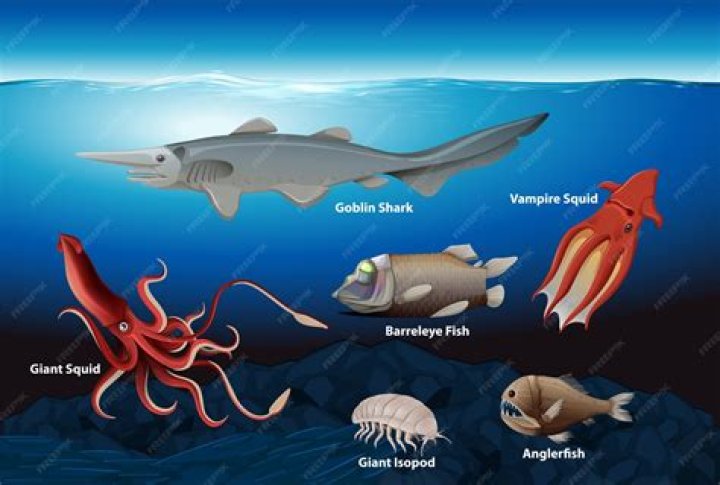
The deep sea is more active than expectedThey also found life at this depth. In fact, Titanic itself had become a reef. Twenty-four different species including fish, crabs and corals were found to have made a home at the site.